Futurism
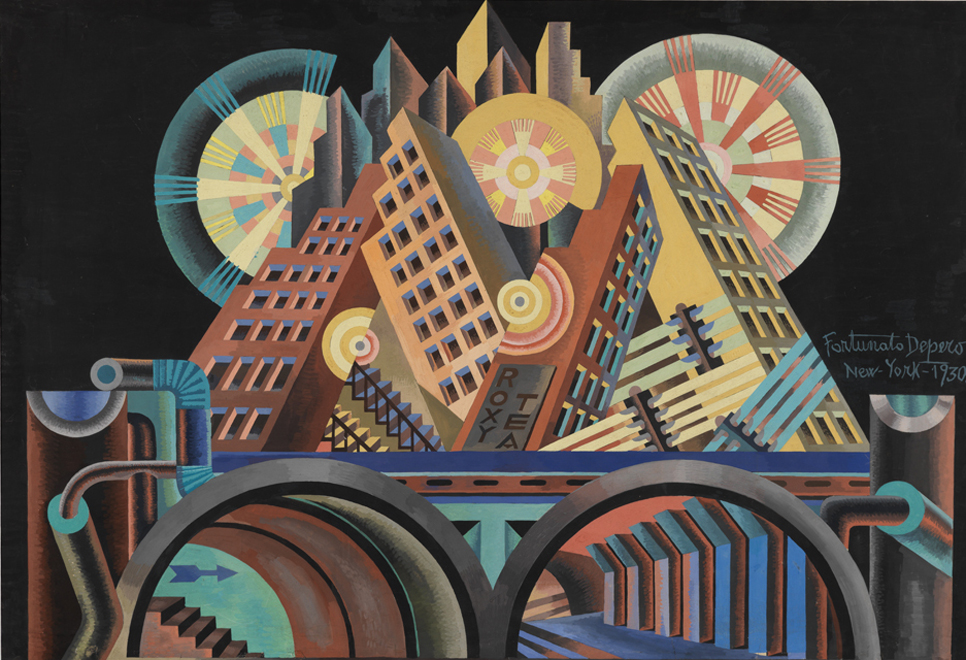
Futurism was an early 20th century Italian social and artistic movement. It was largely confined to Italy, although parallel movements did appear in England, Russia and elsewhere. Those of the Futurist movement experimented in every medium of art, from the traditional painting, sculpture and ceramics to literature, architecture and theater, even extending to gastronomy. In practice, much of their work was influenced by Cubism, and has been described as being of "plastic dynamism".
Futurism was founded by Italian writer Filippo Tommaso Marinetti. It was launched in his Futurist Manifesto, which he published orginally on 5 February 1909. Additonally, it was reprinted by French Newspaper Le Figaro on 20th February. Marinetti was soon joined by the painters Umberto Boccioni, Carlo Carrà, Giacomo Balla, Gino Severini and the composer Luigi Russolo. As suggested by the name of the movement, Marinetti expressed a passitionate distaste for everything old, particularly artistic (and political) tradition. Those of the movement admired anything that represented the technological advancement of humanity, and its triumph over nature, such as the automobile, aeroplane and industrial urban city. They were also passionate nationalists. Publishing manifestos such as the one orginally published by Marinetti became a feature of the movement, and under his guidance they wrote on varied subjects, from cooking to religion.
Many Italian Futurists supported Fascism in an attempt to support the modernisation of Italy, which was divided into the industrial North and rural South. After Fascism's triumph in Italy in 1922, the Futurists gained official acceptance in Italy, and the opportunity to carry out important works, especially in architecture.
The Edit that inspired this direction of research
